(photo credit: skyhi-usedcar.blogspot.com)
Yesterday morning, I woke up extremely excited due to the fact that I had tickets to the Indianapolis 500, the greatest racing spectacle in the world. I've been to Indianapolis Motor Speedway several times but this was the first time I would be going to the race itself.
As most of you know, Evansville is stuck in regressive mode so we haven't been able to get any form of passenger rail transportation here whether it be light rail, high speed rail, or even AMTRAK. Therefore, I was forced to take my automobile to Indy. So I did figuring it would be no big deal.
I began the trip early at 5 am and was at least fortunate to reach my
roommates hotel where he would be riding with me to the race. For those who haven't been to Indianapolis recently, take a ride to the Indianapolis Bypass (I-465) where it meets I-70 and you will see what kind of mess I-69 is going to be. You will see trees plowed over, concrete roads going all over the place, orange barrels galore, and dried up waterways that use to flow.
Anyways, as we were finally leaving the hotel, I drove just two roads away from the hotel before my car decides it's going to take the day off. Right in the middle of the road, I was forced to push my vehicle across three lanes of traffic (of course all the drivers were so friendly about it!). The only good thing about it was that it decided to die before I got in the middle of race traffic in Speedway. That could have gotten very ugly.
This car trouble has been no fluke or one-time
occurrence. This has been the third time I have had a car quit on me while I was out of time. The two other times were....
2008Back in 2008, I decided to take a road trip with a couple of my old
roommates to New York City to say good-bye to Shea and Yankee Stadiums. My uncle has an apartment in downtown Manhattan so I decided to make the 15 hour trek all the way into the center of NYC. By the time I made it to the enormous steep grades in the West Virginia mountains, my car had already been giving small signs that it wasn't going to stay running for the whole trip. The transmission was going sooner or later. Naturally, I made it all the way to the middle of Manhattan when the transmission decided to finally bite the dust.
I found a mechanic over in New Jersey who gave me the wonderful news that my car wasn't going anywhere for good. During the whole week I was up there waiting for my car to be diagnosed, I didn't miss it at all. I went to Yankee Stadium, Shea Stadium, Brooklyn (future
Barclays Center site), Harlem, and Ground Zero on the New York City subways. There wasn't one spot in the whole region I couldn't get to.
Once it was time to leave, I had to make the decision to send my old car (a Mercury Mystique) to the Jersey junkyard and buy another one (a Ford Contour). While I got lucky that I found a car that is basically the same style as my old one, it still cost me several thousand dollars that I had to borrow instantly. And it certainly wasn't easy explaining to the New Jersey or Kentucky (where I lived at the time)
BMV's that I needed to switch plates. Both were just concerned with hitting me with as many taxes as possible.
2009I used to take one road trip with my old
roommates from college and in 2009 we decided that we were going to take AMTRAK to Chicago where we would watch both a White
Sox and a Cubs game on the same day. Since Evansville doesn't have AMTRAK, we had to drive all the way over to St. Louis to get on the train which we did.
On the way to St. Louis, I decided to stop in Illinois for gas. That was a huge mistake because when I shut the engine off, the starter went out. My buddy and I sat there for hours trying to get the car to work. Finally, after about two hours of just standing around wondering what we were going to do, the starter clicked over. We were then running behind schedule to catch the AMTRAK but we went flying into St.Louis to catch it (Thankfully some of those turns on I-64 have banking).
Naturally, right as we were pulling up the AMTRAK train was pulling out with the next train arriving 12 hours later. The only chance we had was to beat the train to its next stop in Alton, IL. We decided to try it (don't ask me why), and right as we're arriving the train is pulling out again.
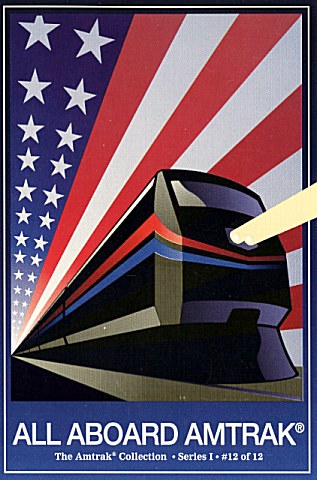
However, AMTRAK has such great customer service. Already down the line a little bit, the conductor sitting in the back rail car sees us pulling up and stops the train. We were able to board the train outside of the station. I can't get over how incredibly nice that was of AMTRAK. That's how close I came to being stuck in the middle of nowhere due to the automobile.
Just like in NYC, we were easily able to get around Chicago without the car. In fact, Wrigley Field and US Cellular Field are on the same subway line. When we got back, we were very fortunate that the starter in the car started up one last time to get us back home to Evansville where I was able to round up a mechanic.
So, while building I-69 may look great to some on paper, the truth is, I-69 will just cause more headaches. If you're filthy rich, you may be saying, "No big deal, I got plenty of money to call a tow truck and take it to a mechanic." What you don't realize is that it's not that easy. Yesterday I was stuck in Indy on a holiday weekend. No mechanics and probably limited tow truck drivers, not to mention the fact that I didn't have a hotel up there as it was just a drive up/drive back trip.
When everything was said and done, I ended up spending over $200 borrowing my aunt's truck,
gassing it up, putting a U-Haul tow-bar on it, and dragging it back home to the shop. I am now down to peanuts in my wallet. How many other people who drive to the Indy 500 will be in the same position as I was if they had car trouble?
Insurance companies,
BMVs, gas prices, and car trouble are just a few of the many reasons why we do not need to be building anymore interstates. The whole ironic thing about it was the fact that while I was stranded on the side of the road, the C&P decides to produce another terrible pro-I-69 article...
http://www.courierpress.com/news/2011/may/29/interstate-69-the-issue-star-supports-roadblock/
Folks in Southwestern Indiana have long understood that any number of influential voices in Indianapolis don't give a whit what happens in this corner of the state. That attitude was best demonstrated in 2000 when the Indianapolis Star, the state's largest newspaper, called the then-proposed Interstate 69 highway between Evansville and Indianapolis the "highway to nowhere."
First it was
Bloomington's fault now it's Indianapolis' fault that I-69 supporters aren't having their greedy way? Even Tom Brokaw put I-69 in his Fleecing of America segment on the NBC News. When you build a highway that trims less than 13 minutes off your total trip, that is indeed a highway to nowhere.
No surprise there. The attitude thing with Indianapolis has never been a secret, plus The Star has opposed the proposed highway for years, stating on occasion that the existing U.S. 41/Interstate-70 route would be preferable to them to a direct, new terrain route through Bloomington.
Isn't it funny how this interstate is suppose to be the best thing since sliced bread, yet Indianapolis and
Bloomington are both against it? At least the rest of Indiana is looking at this project with some common sense.
We would expect no less nonsense from the jokers in Bloomington, but not from The Star newspaper. And yet, this past week, an editorial in the newspaper suggested the Bloomington delaying tactics offer the Daniels administration an opportunity to save $400 million, the cost of the highway between Crane and Bloomington.
Wait a minute. If Indianapolis has always been out to get Evansville, then why would we expect anything different? The truth is, no matter if you're in a college town or a major urban city, wasting money on a road from the 1950s doesn't make sense, especially when it will end up costing well over $5 billion.
And what is it with the C&P calling groups jokers and clowns? No wonder other cities don't care about Evansville. I still don't understand why we should be calling
Bloomington clowns and jokers when we have stoplights on the Lloyd, destroyed our light rail system, and have let our downtown turn to ruins.
They point out that the new terrain route is opposed by city councils in Indianapolis, Bloomington and Martinsville and by thousands of petitioners concerned about property loss, environmental damage and sheer expense.
Do you suppose those same concerns were raised when Interstates 65, 70, 69 north, 74, and 465 were being planned through and around Indianapolis?
I'm starting to wonder if the C&P just copies and pastes the quotes in the comments section from those whose post under masked screen names. There are several problems with this comment....
1. Most of those interstates were built back when technology wasn't as great. This is like saying, "No one protested the Oregon Trail or Route 66 so why don't we build them now?"
2. A lot of interstates have been protested here in Indiana. Back in 2006, Mitch Daniels proposed an Indiana Commerce Corridor which would have been another loop around Indianapolis. Strong opposition from local residents and the then Democrat-controlled House of Representatives forced Governor Daniels to abandon the ICC plan on March 24, 2007. I-69 itself has been protested as well with the southern point originally being near the I-65/I-70 junction (it would have been I-165). As a result, I-69 ends 11 miles
further north.
3. There's no question that we have a few duplicate interstates elsewhere so why didn't the C&P protest those? We can talk all we want about how one city is getting an interstate over another but the truth is, other cities wanted it more back in the 1950s just like they are wanting high speed rail more now. The C&P is setting us back 50 more years fighting for I-69.
4. There are already two roads you can use for I-69. They are US 41 and I-70. NOBODY would fight upgrading 41.
The editorial points out that direct route opponents still believe there is time to switch to U.S.41/I-70, that that route presents none of the concerns about direct I-69 going into Indianapolis, it believes that the economic case for the new terrain roadway over U.S. 41/I-70 never has been made, and that freeway construction has lost its favor over "the decades the I-69 extension has been hashed over."
If favor for freeways really had been lost, then why did they need to modernize I-465 in Indianapolis these past few years to the tune of $800 million, twice what the Crane to Bloomington leg would cost?
As I said earlier, I'm not happy about the I-465 renovation either, and I wish it would have been scrapped too, but lets be honest, the I-465 renovation is still better than building completely new terrain for I-69 and the Indiana Commerce Corridor which would have duplicated routes and destroyed much more of the environment. The Indy Star is right on the money: THE INTERSTATE ERA IS OVER!
With Major Moves, Daniels has given this state the opportunity for millions in infrastructure construction and modernization, at a time when many other states are paralyzed to do anything.
This is where the C&P and me are 180 degrees different. What good does it do to sell an interstate in northern Indiana for less that what it would have brought in in tolls, and then build more interstates that will make Indiana dependent on the automobile. You see, if we were to use our gas tax revenue smartly, building high speed rail would be very quick and easy. When you pay a gas tax or a toll, it should go towards improving your commute, not building more roads to keep you stuck with the auto system of the 20
th century.
And he need not explain to the people of Southern Indiana the extraordinary steps he has taken to see that they are finally getting a modern highway to their state capital.
Modern highway? That's like clean coal or a healthy cigarette. It just doesn't exist. My story from yesterday is a perfect example of that!
One final point: Do they actually support the idea of building I-69 only as far as Crane, there to dead end, and then, we presume, to shift the project over to U.S. 41-I-70?
How utterly ridiculous that would be.
Sounds good to me. That would only save a few billion dollars, can't be having that. Didn't the C&P say that they wanted a safe commute for students going to
IU? Well, now they will have that with State Road 37 going to Indianapolis as well. How is that any worse than the death trap that will be left for those going to
Vincenness and
Terre Haute? It's bad enough these first three segments have destroyed a lot of our environment, but let's not let it get any farther than that.
Overall, I am so sick and tired of seeing dollar after dollar going to interstates that aren't dependable when we can be investing in dependable high speed rail for the future. Yesterday's debacle would have NEVER happened if we had high speed rail or AMTRAK here. But if we build I-69, we can expect to see more residents broke down on the side of the road with no hope in sight. We can also expect to see crosses, wrecks, animals that have been run over, flooded farmland, loud semis, and a state still addicted to oil.
We simply cannot trust the automobile. We need RAILS NOT ROADS!

(photo credit:
scientificamerican.com)

(photo credit:
microcosmpublishing.com)
 (photo credit: careerguide.com)
 (photo credit: Dailyplunge.com)